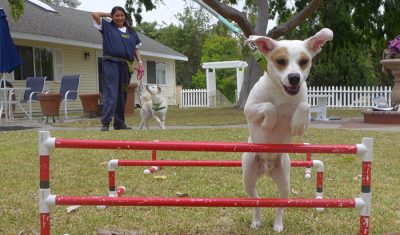
Our program dogs are rescues from local animal shelters. Many years ago, we made the decision not to set up a boarding kennel to house “dogs-in-training” which were waiting for the next training cycle or participating in our advanced training program for service work. Instead of a brick-and-mortar facility for training classes, we planned for our dogs-in-training to be kept at the facilities of our correctional partners. That strategy has enabled us to maintain very low overhead expenses.
Once a group of dogs is selected, we bring them into incarceration facilities where designated trainers care for the dogs 24 hours a day, seven days a week. Before teaming up with one of the dogs, program trainers first participate in four weeks of lecture classes. Then, over the next ten weeks, they teach their canine students good manners and basic obedience. Upon successful completion, each dog is adopted into a loving home.
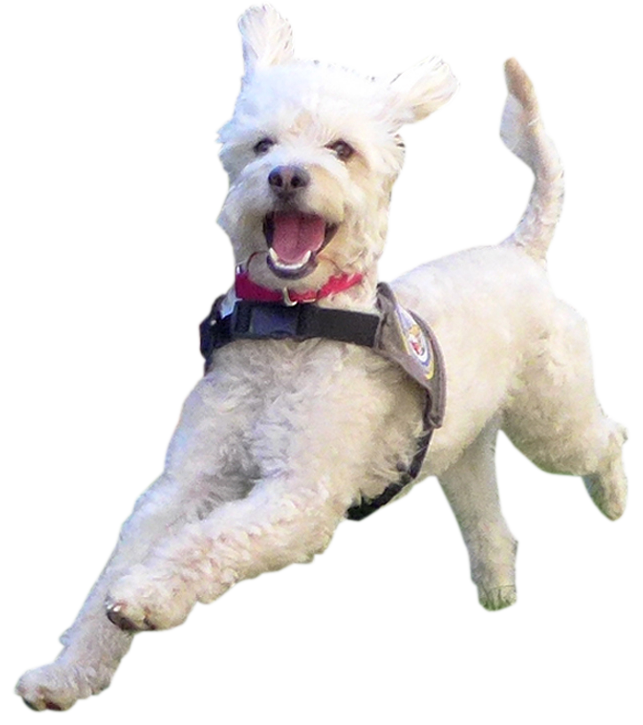
During classes, some dogs exhibit special aptitude, and these canines receive advanced training afterwards in order to become working service dogs.
Drawing from over 19 years of experience in the field, Cell Dogs’ curriculum has received endorsement as continuing education courses by the California Community College Chancellor’s Office. Upon completion of the 14-week program, participants receive certification from Santiago Canyon College Continuing Education Department and the Rancho Santiago Community College District. It is our honor to be the first, and as of now, the only such program in California. Our trainers reap therapeutic and psychological benefits. Working with the dogs demands commitment, problem solving, and patience. Through these hands-on experiences, program trainers realize the rewards in working hard towards positive goals. California recidivism rates for juvenile offenders are upwards of 55% within the first year of release. Research by the University of California Irvine found the recidivism rate for our Cell Dogs program to be just 14%.
We significantly impact local communities in a number of ways. Since its inception, Cell Dogs has successfully rescued, trained, and placed over 500 dogs into new homes. The program goes much further than simply reducing euthanasia rates and saving costs at local shelters: it transforms all program participants, providing them (and the dogs they train) with a valuable second chance at leading productive and responsible lives. Dog adoption is also made easier as people looking for a shelter pup are not always equipped to handle an untrained or unsocialized animal.